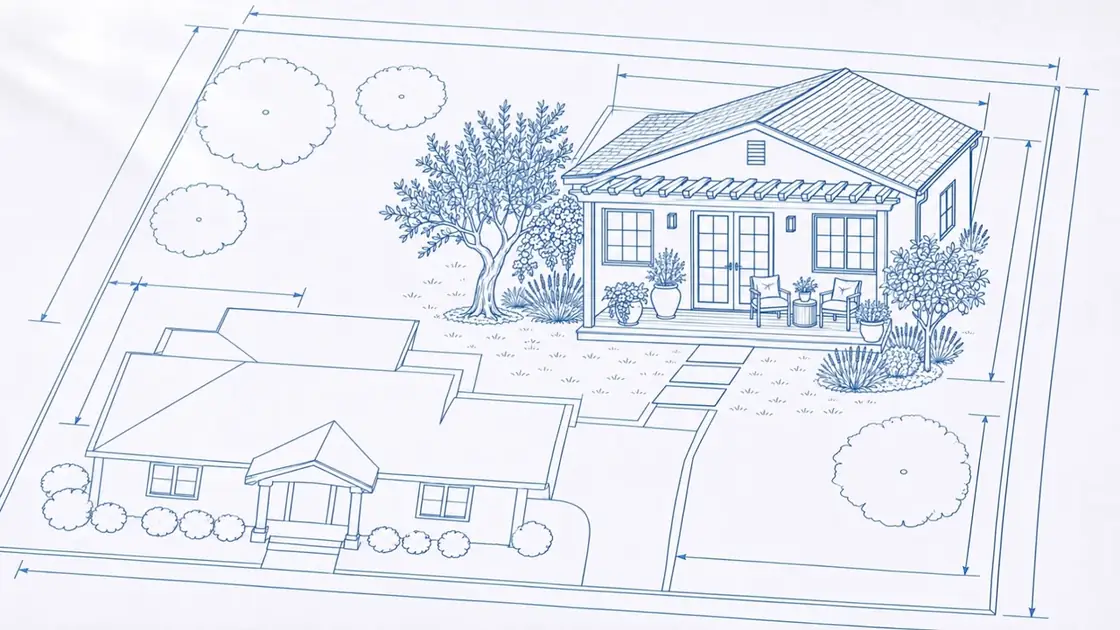
What is a junior ADU (JADU)?
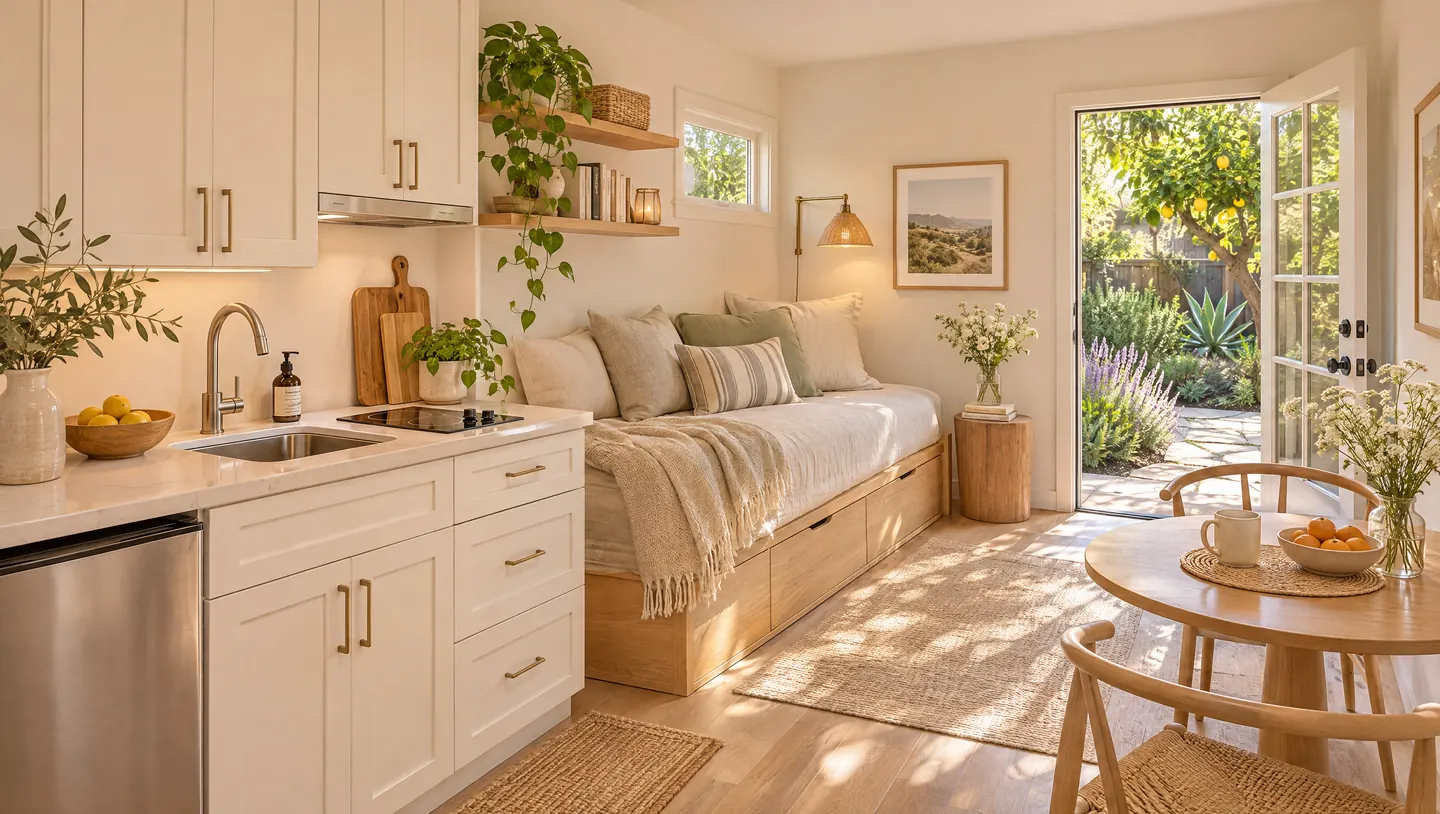
A junior ADU is the in-house version of an ADU. You do not build something new. You make it out of the house you already have. That usually means less construction than a full ADU, and it comes with tighter limits. Here is what a JADU is, how it differs from an ADU, and when it is the right choice.
What is a junior ADU?
A junior accessory dwelling unit, or JADU, is a home of no more than 500 square feet of interior livable space, contained entirely within a single-family house. An attached garage counts as part of the house, so it can become a JADU. So can a bedroom wing, a den or part of the ground floor.
A JADU needs two things of its own: an entrance from outside, and an efficiency kitchen. That means cooking appliances, a food preparation counter and storage cabinets sized to the unit. The bathroom is your choice. A JADU can have its own, or share one with the main house. If it shares, there must be a door between the JADU and the house.
How is a JADU different from an ADU?
| ADU | JADU | |
|---|---|---|
| Where it goes | A new building, an addition or converted space | Inside a single-family house, attached garage included |
| Size | The city sets the cap, at 850 sq ft or more | 500 sq ft at most |
| Kitchen | Its own kitchen | Efficiency kitchen |
| Bathroom | Its own | Its own, or shared with the house |
| Owner lives on site | Not required | Only if the bathroom is shared |
| Parking | One space at most, with many exemptions | None |
| Type of lot | Single-family or multifamily | Single-family only |
For the full picture on ADUs, read What is an ADU?
What are the limits on a JADU?
- One per lot. The lot must have a single-family home, built or proposed.
- Inside the house only. A detached garage or shed can become an ADU, not a JADU.
- No duplexes or apartment buildings. A JADU is for single-family homes.
- No added square footage. State law lets some ADU conversions grow by up to 150 square feet for an entry. A JADU does not get that.
- A deed restriction. The city records one. It says the JADU cannot be sold apart from the house, and it fixes the unit’s size and features.
- Long-term rentals only. Since January 1, 2026, a rented JADU must be rented for longer than 30 days.
Do I have to live in the house if I build a JADU?
It depends on the bathroom. Since January 1, 2026, state law requires the owner to live on the property only when the JADU shares a bathroom with the main house. In that case you live in either the house or the JADU. A JADU with its own bathroom has no owner-occupancy rule.
Before 2026, the rule applied whether or not the bathroom was shared, and some city handouts still describe it that way. If your plan depends on renting out both the house and the JADU, ask the city which rule it is applying. We check this for your lot on the free call.
Does a JADU need parking, new utility hookups or fire sprinklers?
- Parking. None. A city cannot require parking for a JADU, even one made from an attached garage.
- Utilities. A JADU made from existing space cannot be required to have a new, separate utility connection, unless it is built together with a new house. It is not treated as a new home when water and sewer connection fees are calculated.
- Impact fees. A city cannot charge impact fees on a JADU of 500 square feet or less.
- Fire sprinklers. Required only if they are required for the main house.
A JADU still has to meet the building code for a place people live in. In the City of Los Angeles, for example, that includes a ceiling at least 7 feet high, an escape window or door in a sleeping room, and permanent heating.
When does a JADU make sense?
A JADU fits when:
- A parent or a grown child wants a front door of their own and is happy to be under the same roof.
- You have an attached garage or a few rooms you barely use.
- You want to keep the whole backyard.
Choose a full ADU when you need more than 500 square feet, when the garage is detached, when you want real separation from the main house, or when the property is a duplex or an apartment building. If a garage is your starting point, see what makes a good garage conversion.
You do not always have to choose. Today, state law lets a JADU share a single-family lot with a detached ADU. Starting January 1, 2027, a new law, AB 956, requires cities to allow two detached ADUs on a single-family lot. A city will not have to approve a JADU on a lot where two are built.
What does a JADU cost, and how long does it take?
Cost depends on the work, not on the label. The big drivers are whether you add a bathroom or share one, how far the plumbing has to run, the condition of the slab and framing if you start from a garage, and the kitchen and finishes you choose. Our projects start at $139k. We have a zero-money-down program for homeowners who qualify, and financing is subject to lender approval. The free call gives you a number for your home.
On timing, the city has 15 business days to say whether your application is complete, and 60 days to approve or deny a complete one. Plan on 6 to 12 months from first call to move-in, depending on how fast your city approves the plans.
Rules vary by city, and they have changed several times in the last few years. The ADU Guru designs, permits and builds ADUs in Los Angeles and Orange County as a licensed general contractor, CSLB #1146040. Book a free call, or phone (323) 766-6656, and we will tell you whether a JADU, an ADU or both fit your home.
Sources
- Accessory Dwelling Unit Handbook, March 2026 (California Department of Housing and Community Development)
- Accessory Dwelling Units (California Department of Housing and Community Development)
- Information Bulletin P/BC 2026-150: Accessory and Junior Accessory Dwelling Units (Los Angeles Department of Building and Safety)
- Governor Newsom signs housing legislation, September 29, 2026: includes AB 956 on ADUs and JADUs (Office of the Governor)
Rules change, and cities add their own. On a free call we check what applies to your lot.