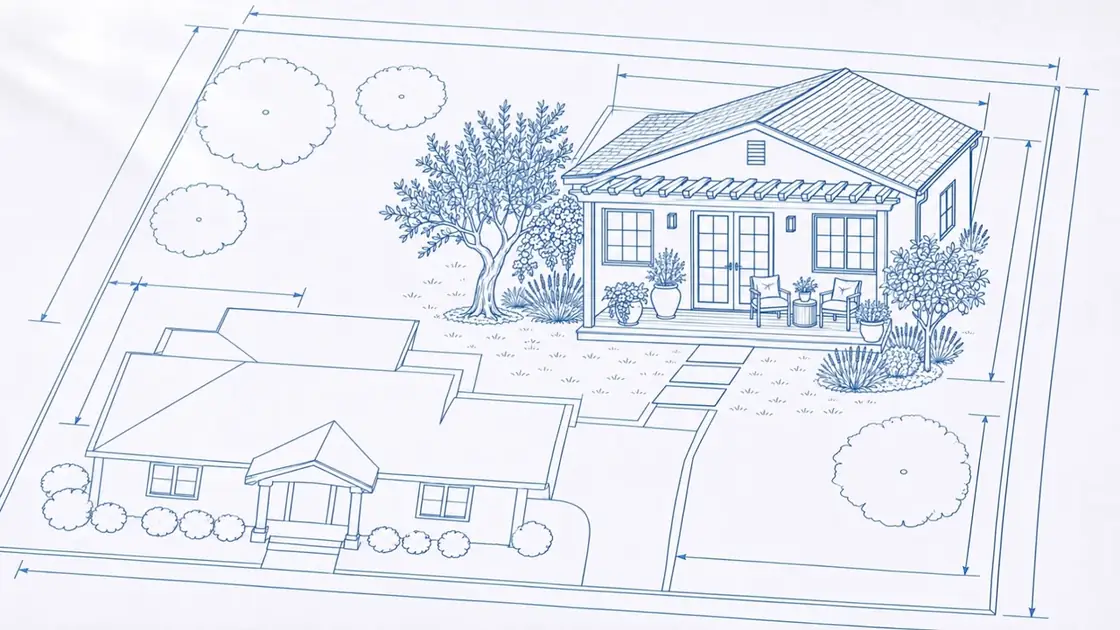
What is an ADU?
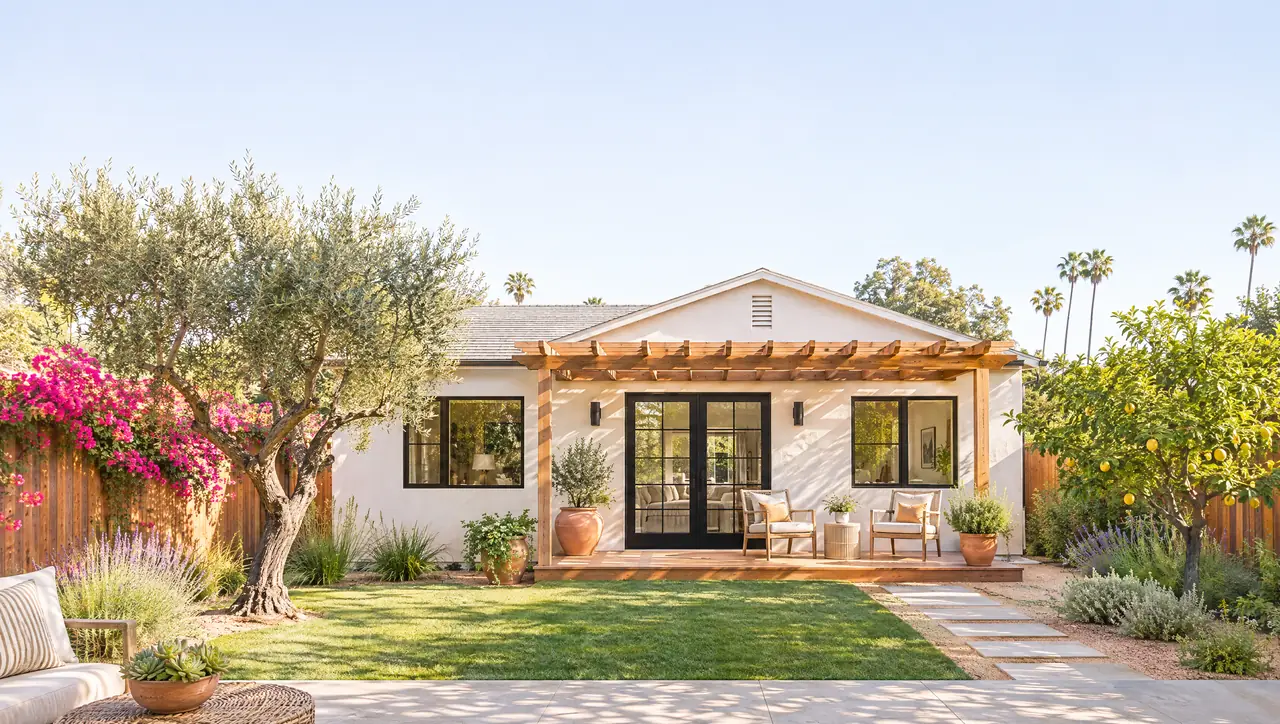
An ADU is a second home on your lot. It is usually smaller than the main house, it has its own front door, kitchen and bathroom, and it is legal to live in and to rent. Since 2016, California has kept changing its laws to make ADUs easier to build. This guide covers the types, the sizes, what state law allows as of November 2026, and why homeowners build one.
What counts as an ADU?
ADU stands for accessory dwelling unit. California law defines it as a complete, independent home on the same lot as a main house: a place to live, sleep, cook and wash that does not depend on the house in front of it.
You may know it by another name: granny flat, in-law unit, backyard cottage. They mean the same thing. A pool house or a spare room without its own kitchen and bathroom is not an ADU.
What types of ADU are there?
- Detached ADU. A new, separate home, usually in the backyard.
- Attached ADU. New space built onto the main house, beside it or above it.
- Conversion ADU. Space you already have, turned into a home: a garage, a basement, part of the house. See what makes a good garage conversion.
- Junior ADU (JADU). A unit of up to 500 square feet inside the walls of a single-family house. It follows its own rules, covered in our JADU guide.
How big can an ADU be in California?
State law sets the floor. A city can allow more, never less. Since 2026, sizes are measured as interior livable space.
| Question | State rule, November 2026 |
|---|---|
| What must every city allow? | An ADU of at least 800 sq ft with 4-foot side and rear setbacks, even where lot coverage or open space rules would block it |
| How low can a city set its size cap? | No lower than 850 sq ft, or 1,000 sq ft for an ADU with more than one bedroom |
| What if a city has no ordinance of its own? | Up to 1,200 sq ft for a new detached ADU. An attached ADU can be up to half the floor area of the main house |
| What about conversions? | No size cap. The space you convert sets the size |
The City of Los Angeles and unincorporated Orange County both cap a new detached ADU at 1,200 square feet today. Other cities set their own numbers.
How tall can an ADU be, and how close to the property line?
A city cannot set the height limit for a detached ADU below 16 feet. The limit rises to 18 feet on lots within a half-mile walk of a major transit stop or a high-quality transit corridor, with 2 more feet allowed so the roof pitch can match the main house. An attached ADU can reach 25 feet or the height limit for the main house, whichever is lower. Two stories are possible where they fit under the limit.
A new ADU needs side and rear setbacks of no more than 4 feet. A conversion needs none. An existing garage near the property line can stay where it is, as long as it meets the fire-safety rules in the building code.
How many ADUs can I have on one lot?
On a lot with a single-family home, state law requires cities to allow one ADU converted from existing space, one new detached ADU and one JADU.
That changes soon. A law signed in September 2026, AB 956, raises the number of detached ADUs to two starting January 1, 2027. A city will not have to approve a JADU on a lot where two detached ADUs are built.
Lots with a duplex or an apartment building follow different rules and can often add more.
Do I have to live on the property?
No. State law does not let a city require the owner to live on a property with an ADU. You can live in the house, in the ADU or somewhere else. The main exception is a junior ADU that shares a bathroom with the main house.
How long does a permit take, and what does an ADU cost?
ADU permits are decided on written standards, with no public hearing. The city has 15 business days to tell you whether your application is complete. It then has 60 days to approve or deny a complete application on a lot that already has a home. Plan on 6 to 12 months from first call to move-in, depending on how fast your city approves the plans.
Cost depends on the type of ADU, its size, the site (slope, access, distance to utilities) and the finishes. Fees matter too: an ADU with 750 square feet or less of interior livable space pays no impact fees. Our projects start at $139k. We have a zero-money-down program for homeowners who qualify, and financing is subject to lender approval. The free call gives you a number for your lot.
Why do people build an ADU?
Four reasons come up again and again:
- Rent. A tenant in the backyard, to help with the mortgage. We never promise rent. Our free rent report shows what homes rent for in your ZIP code, so you can judge for yourself.
- Parents. Mom and Dad close by, with their own front door.
- Kids. A real start for a grown child, on land the family already owns.
- Yourself. Move into the small house. Rent the big one, or hand it to the kids.
Do ADU rules change from city to city?
Yes. State law is the minimum, and each city and county can write its own ordinance on top of it. Los Angeles, the unincorporated county areas and each city in Orange County have their own details. Hillside lots, very high fire hazard zones and the coastal zone can bring extra limits or steps.
That is why the first thing we look at is your lot.
The ADU Guru designs, permits and builds ADUs in Los Angeles and Orange County. We are a licensed general contractor, CSLB #1146040. Book a free call, or phone (323) 766-6656, and we will tell you what fits on your lot and which rules apply to it.
Sources
- Accessory Dwelling Unit Handbook, March 2026 (California Department of Housing and Community Development)
- ZA Memorandum No. 143, Revision 1: ADU and JADU standards in the City of Los Angeles (Los Angeles City Planning)
- Accessory Dwelling Units fact sheet, January 2026 (County of Orange, OC Development Services)
- Governor Newsom signs housing legislation, September 29, 2026: includes AB 956 on ADUs (Office of the Governor)
Rules change, and cities add their own. On a free call we check what applies to your lot.