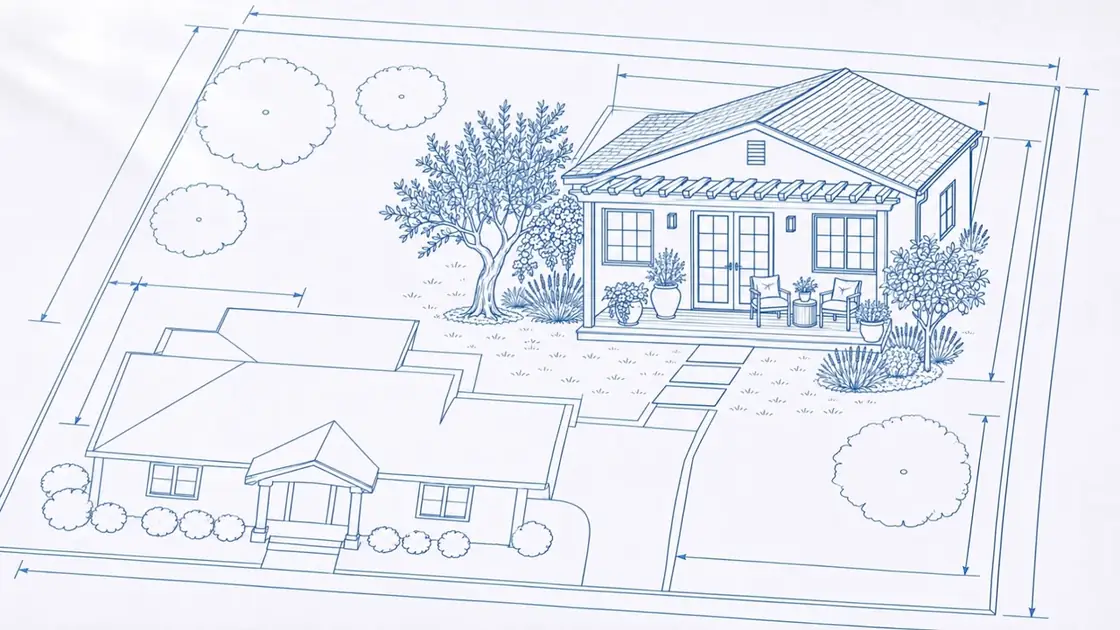
SB 9 in plain words: lot splits and duplexes
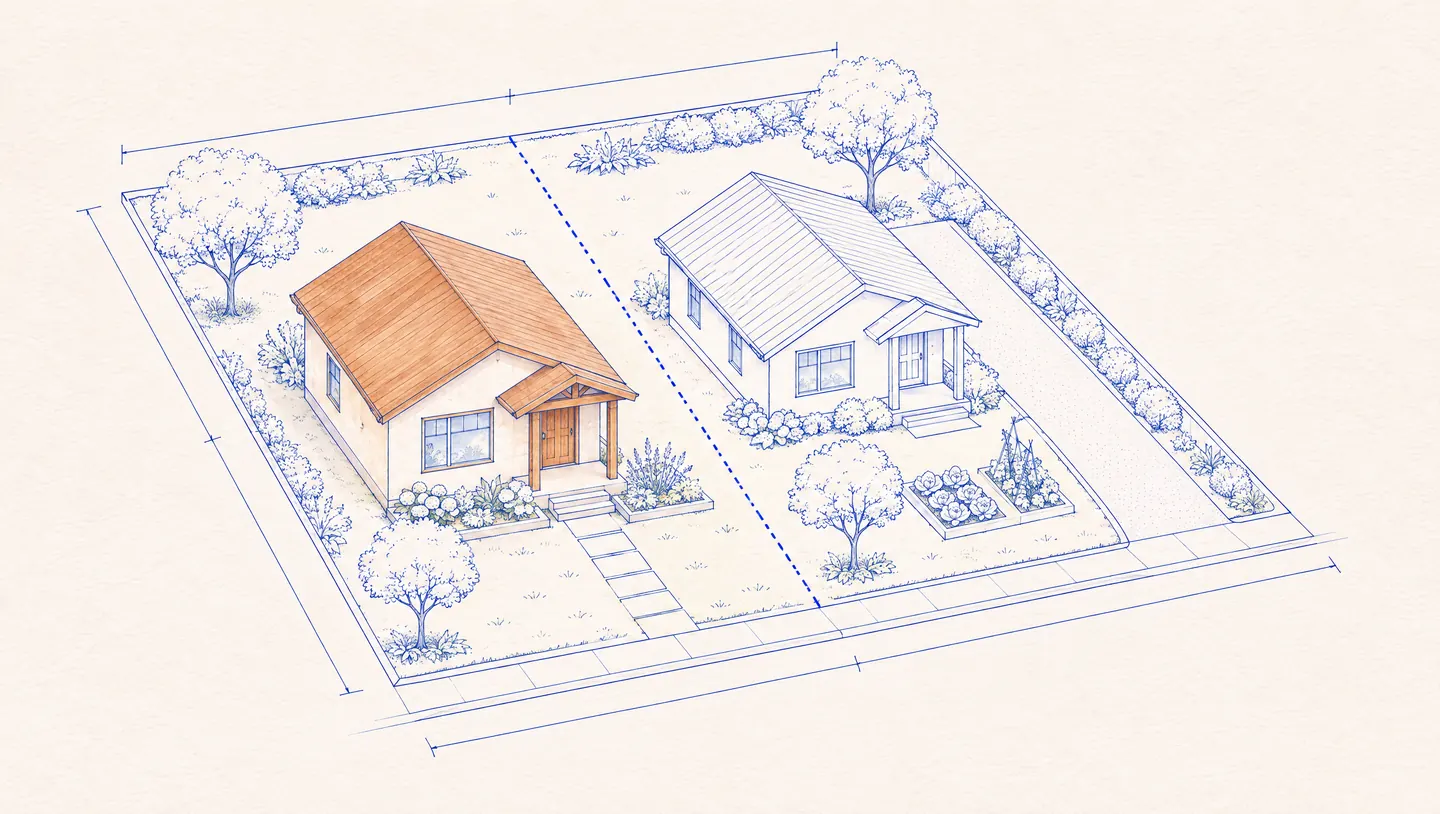
SB 9 is a California law that took effect on January 1, 2022. It lets some single-family lots hold more than one house, and lets some be split in two. It is often mixed up with ADU law, but the two are separate. Here is what SB 9 does, who can use it, and where the limits are.
What does SB 9 allow?
Two things, alone or together.
Two homes on one lot. On a qualifying single-family lot, the city must allow up to two primary homes. They can be attached, like a duplex, or stand apart.
An urban lot split. One lot becomes two. Each new lot must be at least 1,200 square feet, and neither can be smaller than 40 percent of the original. Each new lot can then hold up to two homes.
In both cases the review is “ministerial.” City staff check the plans against written, objective standards. There is no public hearing and no vote. The city has 60 days from a complete application to approve or deny it. If it does neither, the law treats the application as approved.
Local standards have limits of their own. They cannot stop two homes of at least 800 square feet each. Side and rear setbacks can be no more than four feet.
Does my lot qualify?
A lot has to pass several tests.
- Zoning. It is zoned single-family residential. Multifamily, commercial and mixed-use zones do not count.
- Location. It is in a city that includes an urban area as the U.S. Census Bureau defines one. Outside city limits, the lot itself must sit inside one.
- Protected land. It is not on wetlands, prime farmland or protected habitat. In very high fire hazard zones, flood zones and earthquake fault zones, a project qualifies only if it meets specific building or mitigation standards.
- Existing housing. The project cannot demolish or alter housing that is rent-controlled, restricted to affordable rents, or occupied by a tenant in the last three years. A lot where rentals were taken off the market under the Ellis Act in the last 15 years is out.
- Historic sites. Landmarks and contributing structures in historic districts are protected. Since January 1, 2026, a lot is no longer ruled out only because it sits inside a historic district.
What are the main limits?
- Home count. After a lot split, each new lot is capped at two homes, and ADUs and junior ADUs count toward the two. Without a split, the lot can have two primary homes plus the ADUs that ADU law allows there.
- Living there. To split a lot, the owner signs an affidavit of intent to live in one of the homes as a main residence for at least three years after approval. Two homes without a split carry no owner-occupancy rule under SB 9.
- One split only. A lot created by an SB 9 split cannot be split again this way. The same owner, or anyone acting with them, cannot split the lot next door.
- Rentals. A home created under SB 9 can be rented only for terms longer than 30 days.
- Parking. A city may require up to one off-street space per home. It cannot require any if the lot is within a half mile’s walk of a major transit stop or a high-quality transit corridor, or within a block of a car-share vehicle.
How is SB 9 different from an ADU?
| ADU | SB 9 | |
|---|---|---|
| What it adds | A smaller, accessory home on the same lot | A second primary home, a second lot, or both |
| Where it works | Lots zoned for single-family or multifamily homes | Single-family zoned lots in urban areas |
| Owner must live there | No (junior ADUs have their own rule) | Only for a lot split: three years, by signed intent |
| Sold separately | Only where the city has opted in | A split creates two separate legal lots |
The two laws can be used together, within the home counts above. If you want one more home behind your house, an ADU usually gets you there with fewer conditions. Start with what an ADU is and how a junior ADU works.
Where do cities differ?
State law sets the floor. Each city or county adds its own objective standards for things like height, front setbacks and design, and runs its own application process. Those standards must apply the same way to other homes in the zone. Some local examples:
- City of Los Angeles. Two-home projects are filed with Building and Safety. Lot splits are filed with City Planning. ZIMAS, the city’s online zoning map, shows an SB 9 eligibility checklist for each address.
- Unincorporated Los Angeles County. SB 9 applies in the R-1 and R-A zones and a few specific-plan zones. The county does not currently approve SB 9 projects in the coastal zone. A lot split needs a recorded final map before construction can start.
- Palisades and Eaton fire areas. Since 2025, a state executive order has let local governments restrict SB 9 in the very high fire hazard zones inside the burn areas. Ask the city or county what applies today.
- Orange County. Each city, and the county for unincorporated areas, applies its own standards and forms.
Does SB 9 apply in charter cities?
The law says it applies to every city, charter cities included. That has been challenged in court, and the question is not finally settled.
In 2024 a Los Angeles trial court ruled that SB 9 violated the state constitution as applied to five charter cities that sued: Redondo Beach, Carson, Torrance, Whittier and Del Mar. The Legislature then amended the law with SB 450. On November 12, 2025, the Court of Appeal reversed the trial court’s judgment and sent the case back to be reconsidered under the amended law. It did not decide whether SB 9 is constitutional.
If your lot is in one of those cities, ask the planning department how it handles SB 9 applications now.
SB 9 and ADU law overlap, and the right path depends on your zoning, your lot and your city. Book a free call. We will check what applies to your lot and tell you plainly whether an ADU fits, and whether SB 9 is worth a closer look with your city.
Sources
- California Department of Housing and Community Development: Housing Law Fact Sheet, Duplexes and Lot Splits (SB 9), April 2026
- California Legislative Information: AB 1061 (2025), with the text of Government Code sections 65852.21 and 66411.7 as amended
- Los Angeles County Planning: SB 9
- Los Angeles Department of Building and Safety: Senate Bill 9, Two-Unit Development and Urban Lot Split
- California Court of Appeal: City of Redondo Beach v. Bonta, B338990 (November 12, 2025)
Rules change, and cities add their own. On a free call we check what applies to your lot.