Renting out your ADU: what to know first
Many people build an ADU to rent out, and rent can help with the mortgage. It also makes you a landlord, with a tenant a few steps from your back door.
This guide covers the rules to check and the habits that keep things calm. It is general information, not legal advice.
Can I rent out my ADU in California?
Yes. Cities are not allowed to require that you live on the property in order to rent out a regular ADU. A junior ADU is different. If it shares a bathroom with the main house, the owner has to live in the house or in the junior ADU.
Before you look for a tenant, make sure the ADU has its final approval from the city, called a certificate of occupancy. Then check your city’s rental rules, including any registration, and your HOA’s rules if you have one.
Can I use my ADU as a short-term rental?
In most cases, no. Plan on tenants who stay longer than 30 days.
California requires rentals to run longer than 30 days for junior ADUs and for ADUs approved under the state’s streamlined rules. Those rules cover conversions of existing space, such as a garage, and detached units up to 800 square feet. Cities may set the same requirement for every other ADU.
The City of Los Angeles adds its Home-Sharing Ordinance. Short-term rental, meaning 30 days or less, is allowed only in a registered host’s primary residence, the home where the host lives more than six months of the year. An ADU with a permit application filed in 2017 or later qualifies only if the host lives in the ADU itself. Units under the city’s rent stabilization rules cannot be registered at all.
Other cities write their own rules. Ask your planning department before you furnish for short stays.
Which rent and eviction rules apply to an ADU?
State law comes first, and your city may add its own.
State law. The Tenant Protection Act limits rent increases for most rentals. In any 12 months, rent cannot go up by more than 5% plus the local change in the cost of living, and never by more than 10%. Once a tenant has lived there 12 months, you also need a legal reason, called just cause, to end the tenancy. Housing that received its certificate of occupancy within the last 15 years is exempt. That usually covers a newly built ADU for a time, but the 15 years keep counting.
City of Los Angeles. The Rent Stabilization Ordinance generally covers rentals built on or before October 1, 1978, unless there is only one house on the lot. Adding an ADU can change that. According to the Los Angeles Housing Department, a newly built ADU is generally not covered itself, but a main house built by that date can become covered once a second unit sits on the lot. An ADU carved out of the older home’s living space may be covered too. New ADUs outside the ordinance generally fall under the city’s Just Cause Ordinance, which regulates evictions and requires you to register the unit.
Other cities. Some have their own rent rules. Call your city’s housing department before you set the rent. Not built yet? Ask us on a free call which rules apply to your lot.
How do I screen tenants fairly?
Write your standards down before the first applicant calls. Then apply them to everyone in the same way. Fair standards are about the tenancy, not the person: proof of income, rental history, references from past landlords and a credit report.
California bars housing discrimination based on race, religion, national origin, immigration status, disability, sex, gender identity, sexual orientation, age, marital status, having children, source of income and more.
Source of income includes housing vouchers, so a “no vouchers” policy is not allowed. If an applicant has a voucher, any income standard has to be measured against the tenant’s share of the rent, not the full rent.
The California Civil Rights Department says a landlord may generally check criminal history, but may not use blanket bans, arrests that did not lead to a conviction, or sealed and juvenile records.
Keep your notes. If you turn someone down, you should be able to point to the written standard.
What should the lease cover?
Put the lease in writing, use a current California form, and have an attorney review it if you can. With a tenant in your backyard, spell out the shared details:
- Rent, the due date and how it is paid.
- Who pays which utilities, especially if a meter is shared.
- Parking, the yard, laundry and storage.
- Quiet hours, guests and pets.
- How to ask for repairs, and how you will give notice before you come in.
On the deposit: the standard limit in California is one month’s rent, whatever name the charge goes by. An individual owner with no more than two rental properties, and no more than four rental units in total, may ask for up to two months. Lower limits can apply to service members. After the tenant moves out, you have 21 days to return it, with an itemized list of anything you kept.
What about insurance and taxes?
Call your insurer before a tenant moves in. Renting out part of your property can change what your policy covers, and your insurer can tell you what a landlord needs.
Talk to a tax professional as well, about how to report the rent and which costs you can deduct. Our guide Is an ADU worth it? covers the other running costs.
How do I stay a good landlord when the tenant lives next door?
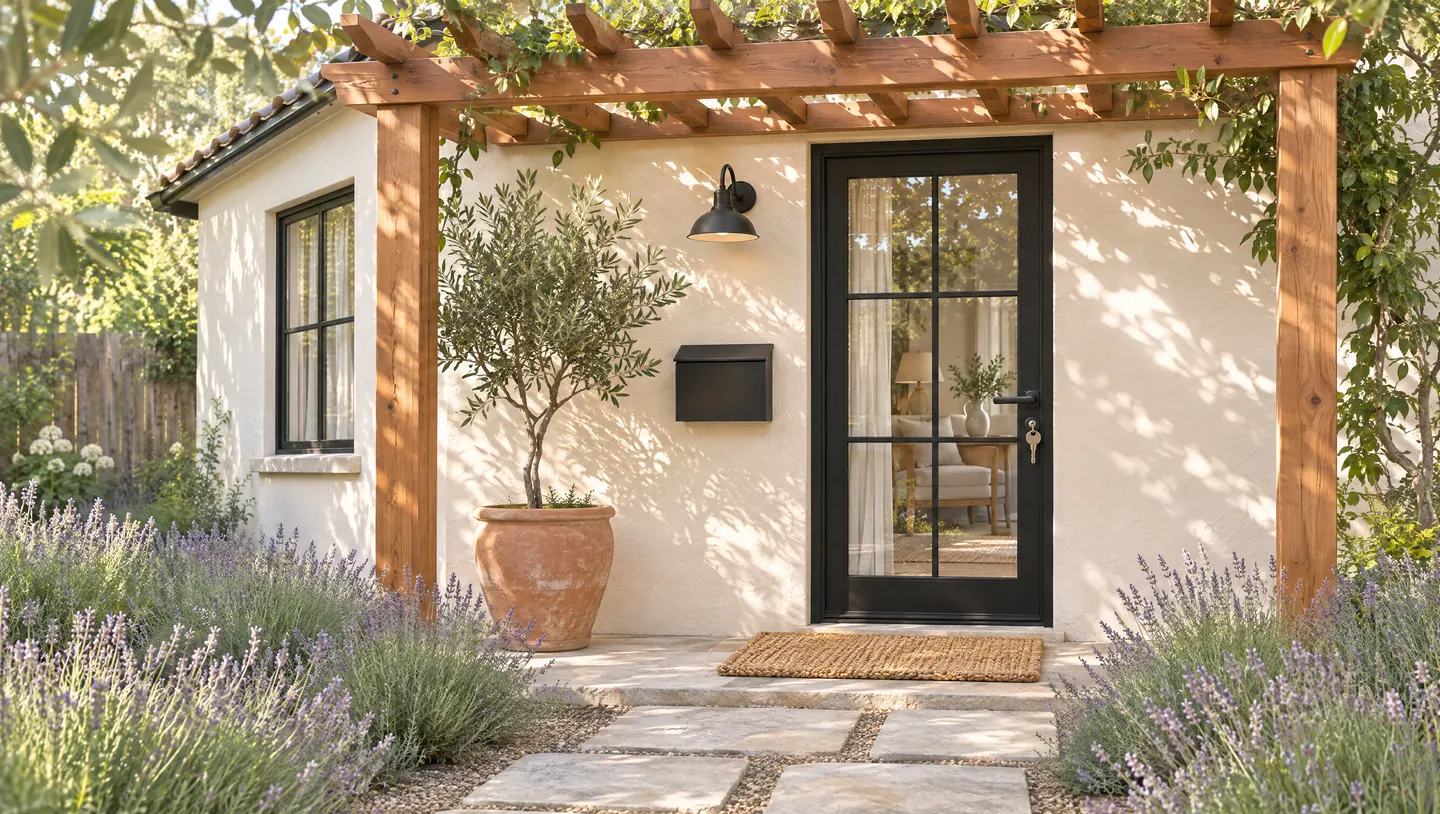
- Design for privacy. A separate entrance, a fence or planting, and windows that don’t face each other do more than any lease rule.
- Keep it businesslike and kind. Give one phone number or email for requests, and answer quickly.
- Fix things fast. Landlords are required to keep a rental safe and in good repair.
- Keep a reserve for repairs and for empty months.
- Never force a tenant out yourself. Locking someone out, shutting off utilities or removing their belongings is illegal. The only lawful way to evict is through the court, so talk to an attorney at the first sign of trouble.
Before you plan around rent, look at what homes rent for near you. Get your free rent report for your ZIP code. The numbers are real and local, and they are not a promise.
Sources
- Accessory Dwelling Unit Handbook (March 2026), California Department of Housing and Community Development
- Home-Sharing Administrative Guidelines (September 2026), Los Angeles City Planning
- Accessory Dwelling Unit, Los Angeles Housing Department
- Landlord-Tenant Issues, California Department of Justice, Office of the Attorney General
- Housing Discrimination, California Civil Rights Department
Rules change, and cities add their own. On a free call we check what applies to your lot.